Describe the Process Involved in Inflammation
Rubor redness due to capillary dilation resulting increased blood flow. It is a body defense reaction in order to eliminate or limit the spread of injurious agent followed by removal of the necrosed.
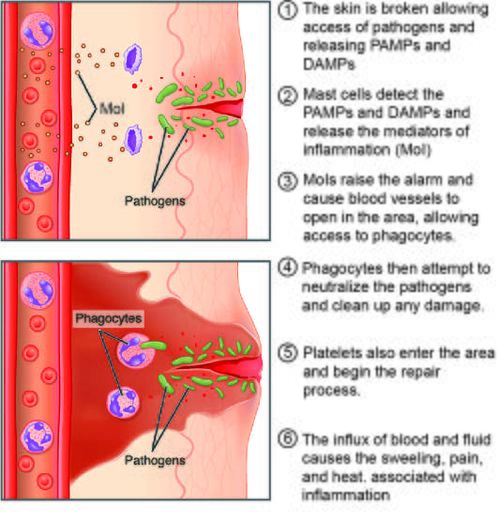
Inflammation Acute And Chronic Physiopedia
Inflammation causes redness by dilation of small blood vessels.

. Step 1 Invasion of the tissue by an organism. Several types of injuries can affect us and cause inflammation. If inflammatory cells stay too long it may lead.
Overview of Process Of Inflammation The purpose of inflammation is to localize and remove foreign substances or to remove damaged or dead tissues and begin to heal. The inflammatory pathway consists of a sequence of events involving inducers sensors mediators and effectors. Answer 1 of 2.
Process of Inflammation When there is injury to any part of the body the aterioles minute blood vessels in the surrounding tissue dilate widen. Fluid proteins red blood cells and white blood cells escape from the intravascular space as a result. The acute inflammation process happens quickly and can be severe.
These little guys and gals reset the pain threshold of your neuro-receptors such that every little movement every little touch now feels like way too much for your liking. The immune system will dilate the blood vessels forcing blood that is rich with oxygen and white blood cells to surround the trauma area. It is a body defence reaction in order to eliminate or limit the spread of injurious agent followed by removal of the necrosed cells and tissues.
The inflammatory process is closely linked to the immune system. As part of the Process of Inflammation your body releases chemicals that enhance your sensitivity to pain. Lets outline the whole inflammatory process to really understand what happens during inflammation.
If youve ever broken a bone or cut yourself youve seen inflammation in action. Chronic inflammation is involved in the disease process of many conditions including. Histamine and leukotrienes are released from basophils and mast cells Interferon is a protein that interferes with virus production and infection.
Endothelial cells become leaky from either direct endothelial cell injury or via chemical mediators. The organisms cause damage to the tissue that results in the release of chemical substances that attract the local immune cells to the site of inflammation. The purpose of vascular changes is to increase blood flow to the local area mobilize and transport cells to the area to initiate healing.
The exogenous and endogenous stimulus is lead to a cell injury cause complex reactions in vascularised connective tissue leading to inflammation. The infectious agents are virusbacteria etc. The combined immediate effect of the release of these chemicals is to cause.
The process by which white blood cells are drawn to the area where they are needed is referred to as chemotaxis. The factors include microorganismphysical agentsinappropriate immunological responsedeath of tissue. The series of events in the process of inflammation are.
Common signs of inflammation following an injury include. 5 The process will initiate in the presence of inducers which can be infectious organisms or non-infectious stimuli such as foreign bodies and signals from necrotic cells or damaged tissues. State the 5 cardinal signs of acute inflammation and describe the physiologic mechanisms involved in the production of these.
Step-by-step explanation The agents causing inflammation are. It occurs when inflammatory cells travel to the place of an injury or foreign body like bacteria. The damaged cells are removed and the body begins to put new collagen in the area of injury.
Dolor pain mainly due to destruction of tissue. Immune system triggers off. Size of blood vessels increase for inflamed area.
Steps in the Inflammation Process STUDY Flashcards Learn Write Spell Test PLAY Match Gravity Created by cdeterman Terms in this set 14 Step one Injury to tissue Step two constriction of microcirculation vasoconstriction Arterioles capillaries and venules Step three Dilation of microcirculation vasodilation Step four Release of histamine. These include the hormones bradykinin and histamine. Inflammatory Response Healing of acute injuries begins with the acute vascular inflammatory response.
Swelling called edema by accumulation of fluid. In systemic inflammation pyrogens stimulate fever production. Inflammation is defined as the local response of living mammalian tissues to injury due to any agent.
Calor heat due to capillary dilation resulting increased blood flow. 21 INTRODUCTION OF INFLAMMATION Inflammation is the dynamic process by which living tissues react to injury. The organisms invade the healthy tissue and infect its cells.
Leads to greater blood flow to the area of inflammation resulting in redness and heat. Warmth at the injury site. Describe the process of inflammation in an area that has been injured.
Swelling bumps or puffiness. The inflammation is a protective response to eliminate the initial cause of cell injury as well as necrotic cells and. Inflammation is an essential part of your bodys healing process.
Tumor swelling due to passage of plasma from the blood stream to the damaged site. They release various substances known as inflammatory mediators. They are physical injury chemical injury bacterial or viral injury heat injury and cold injury.
The process of inflammation that happens secondarily to infection is like this. INFLAMMATION is defined as the local response of living mammalian tissues to injury due to an agent. When an inflammation occurs in your body many different immune system cells may be involved.
They cause the small blood vessels in the tissue to become wider dilate allowing more blood to reach the injured tissue. Acute inflammation has a rapid onset lasts for minutes to days and is characterized by exudation of fluid and protein from vessels and emigration of neutrophils. Immune System is Triggered.
White blood cells start oozing out. Inflammation is the accumulation of white blood cells as they surround and kill the invading pathogen. Leukocyte exudation or extravasation aka.
The inflammatory process following TBI is highly complex and involves numerous cellular populations including astrocytes microglia T cells neutrophils and invading monocytes. Capillary permeability increases for inflame area.
Inflammation Bioninja
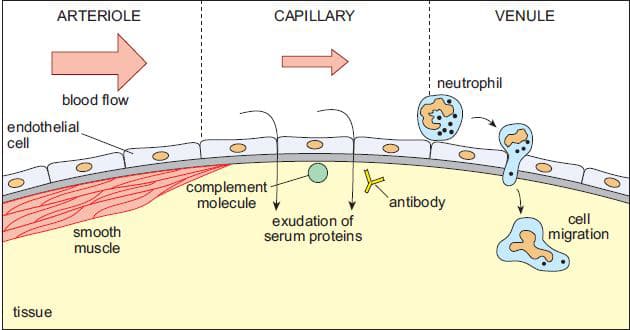
Acute Inflammation Teachmesurgery
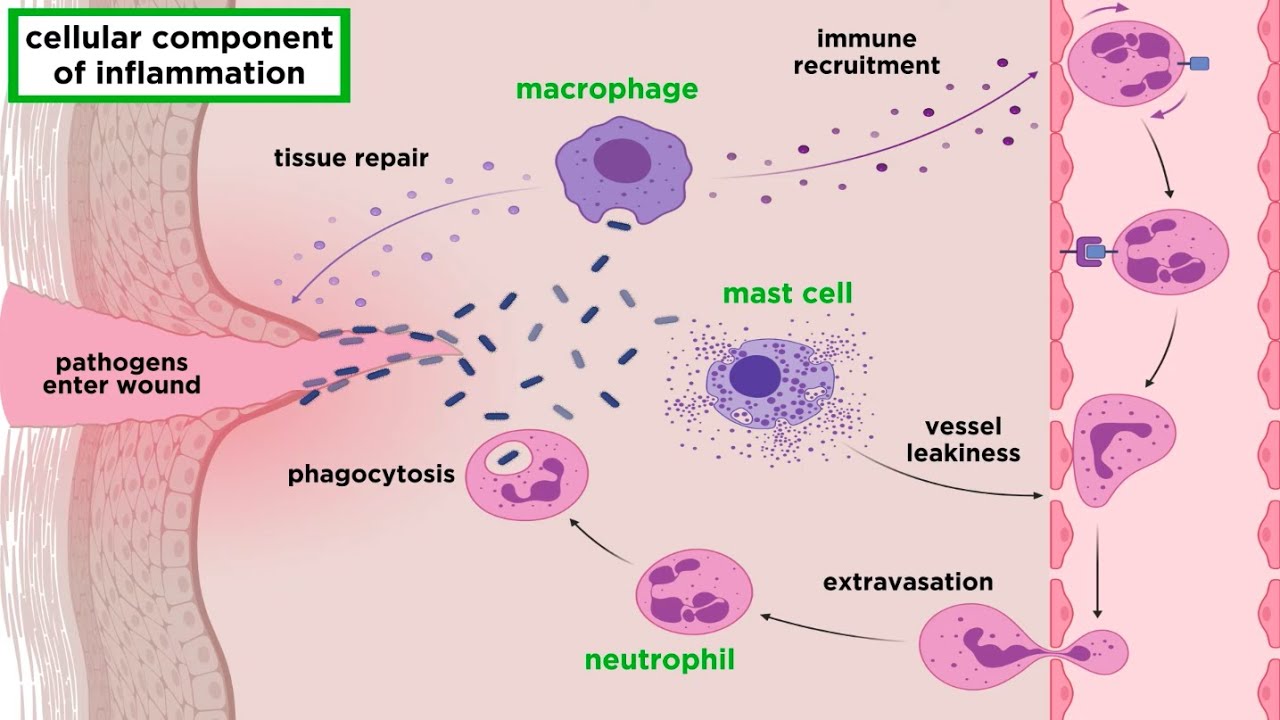
The Inflammatory Response Youtube
The Inflammatory Response Youtube
No comments for "Describe the Process Involved in Inflammation"
Post a Comment